
ADU Services in Bangor and Brewer
Three kinds of accessory dwelling unit for Bangor, Brewer and 20 more towns around them. Each one begins with the town's ADU rule and the sewer or septic answer, before anyone draws a room.
- ADUs are all we build
- Free estimate requests
- 22 towns, Bangor to Hudson
Which of Our Three ADUs Fits Your Lot?
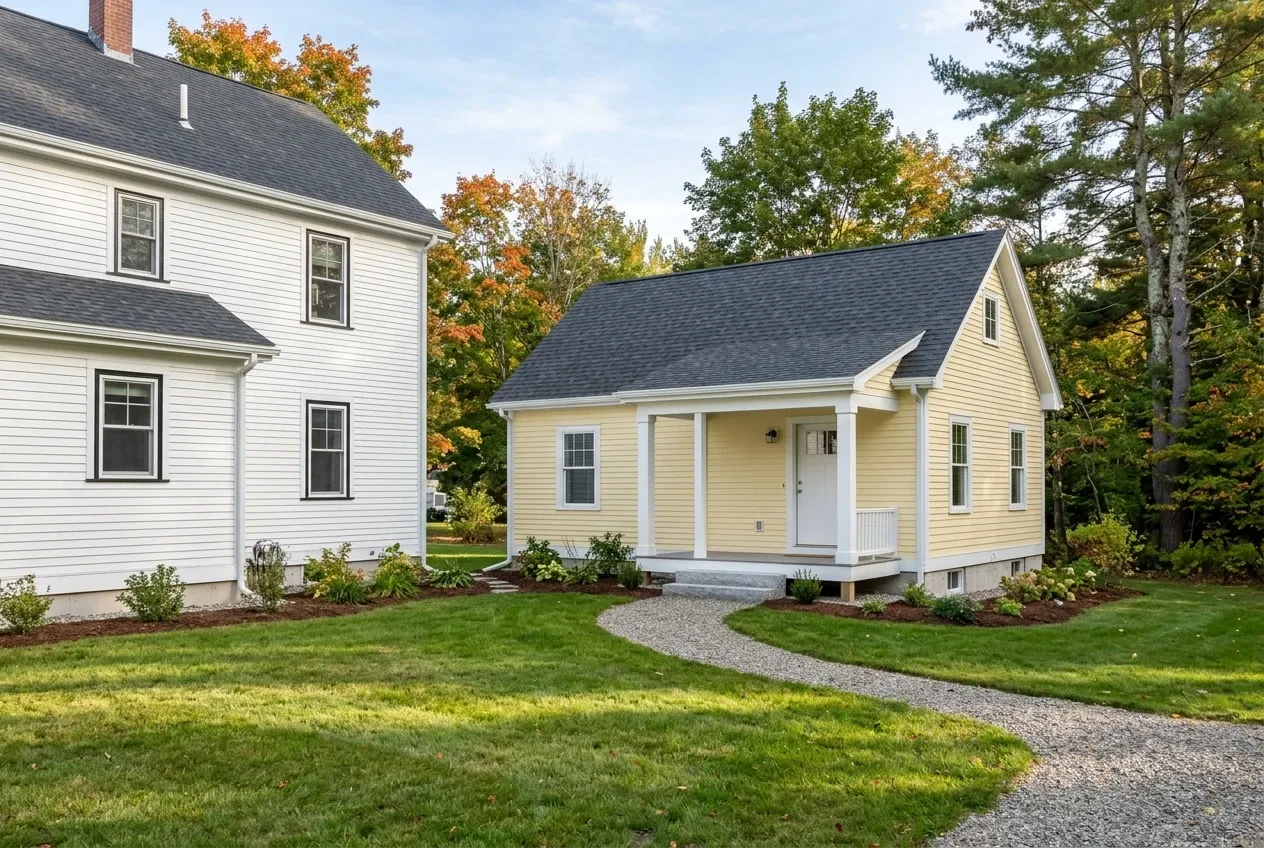
Detached ADUs
A second small house set apart on your lot, with its own door, kitchen and bath. Across many quotes, one with a full kitchen averages $150,000 to $220,000+.See Detached ADUs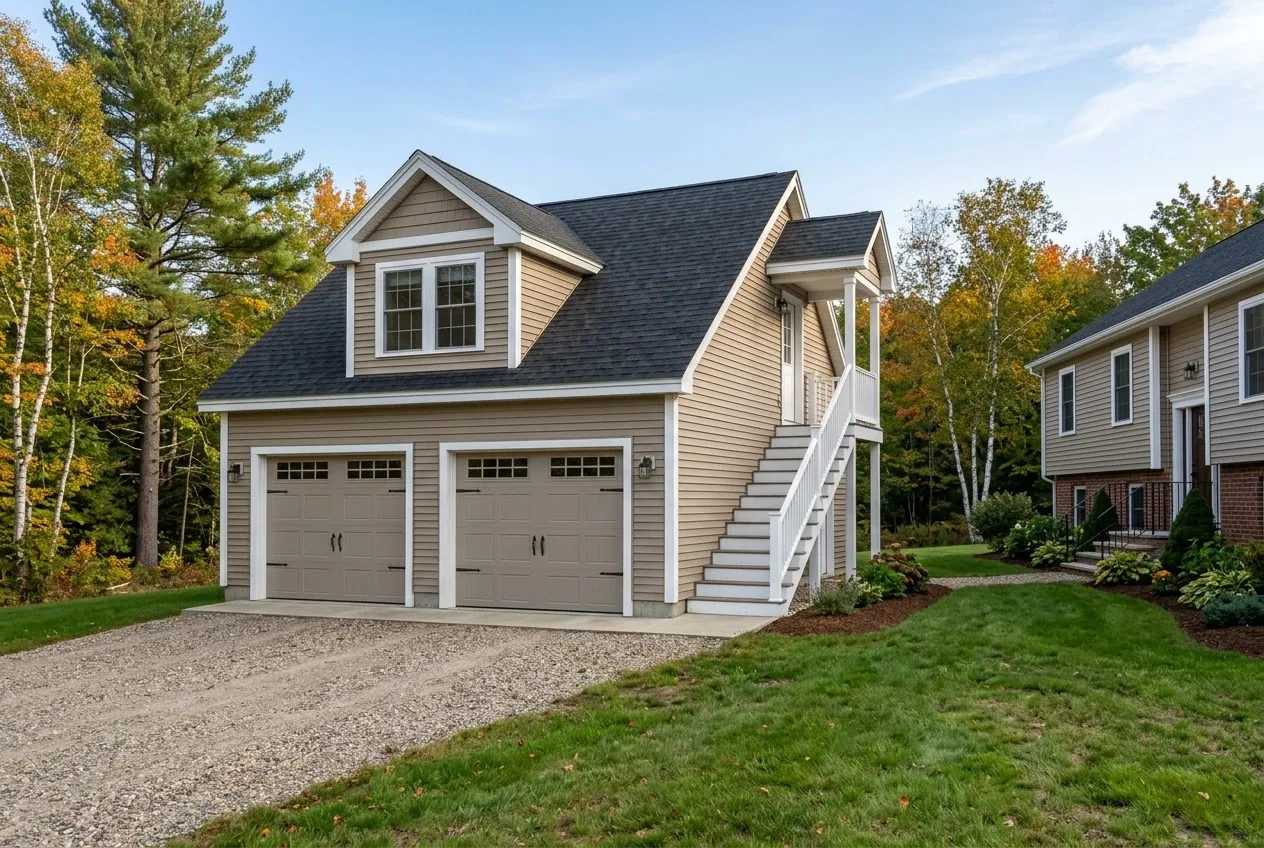
Garage ADUs
An apartment over a new garage, over a sound old one or inside part of one, once the structure is checked. With a kitchenette, these average $85,000 to $130,000 over many quotes.See Garage ADUs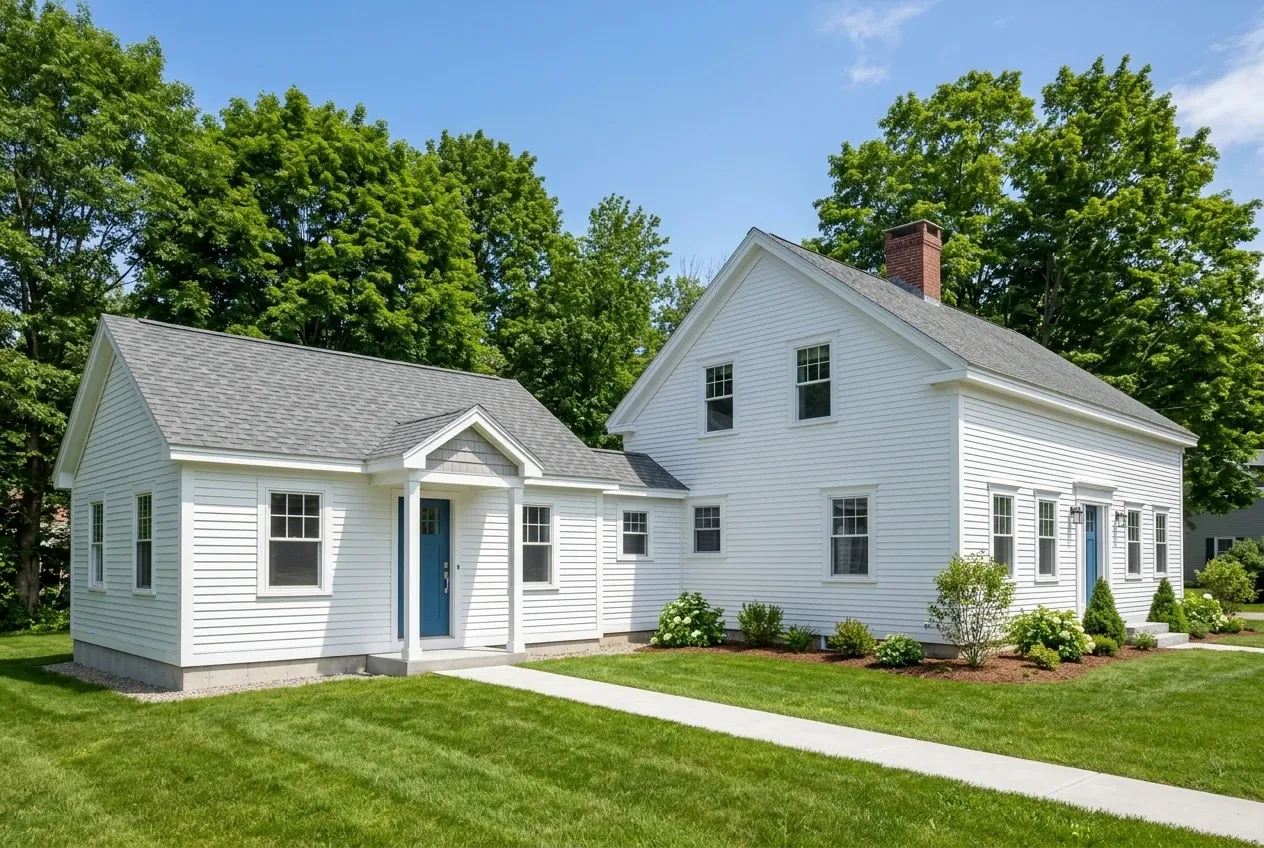
In-Law Apartments
A unit added onto the house or built inside it, from a dry basement to a back ell, behind a fire-rated wall or floor. Priced from a visit, since the house decides what the unit needs.See In-Law Apartments
Where do we build ADUs?
Bangor, Brewer and the towns around them, 22 in all, across Penobscot, Hancock and Waldo counties.
How Do We Help You Choose the Right Kind of ADU?
We help you choose the right kind of ADU by asking three questions before we suggest one: who will live there, what the lot can hold and what the budget can carry. Our answer usually follows the person, because a parent who needs family close and a grown child who wants a door of their own need different units.
Detached ADUs are our pick when privacy comes first and the yard has room past the setbacks. The two households share a lawn and often a driveway, and nothing else: no wall, no floor, no hallway.
Garage ADUs make sense when you need the parking anyway or already own a garage worth building on. The cars and the apartment stand on one foundation under one roof, which is why the garage tier on our cards averages below the detached one.
In-law apartments are the right call when the house has room to give: a dry basement, a back ell or a side that can take a shared wall. They suit a parent who should be a few steps from family, and the house they join decides the price more than their size does.
What Do We Check Before Any ADU Gets Drawn?
Before any ADU gets drawn, we check four things against your lot: the town's ADU rule, the sewer or septic, the setbacks and the parking. Skipping them is how a family ends up paying for drawings of a unit the town or the ground will not take.
The town's rule.
Maine's ADU law makes each town accept at minimum one ADU beside a single-family house wherever its zoning allows homes, and the unit may sit within the house, share a wall with it or stand on its own. Size caps and setbacks remain each town's to write, so we read the current text for yours and take anything that looks older than the state law to the code office (the town's code enforcement officer, who issues permits).
Sewer or septic.
On a sewered street, the unit needs a connection of its own. On septic, a site evaluator (the person who designs septic systems under the state's rules) works out on the HHE-200, the state septic design form, whether the field can take another bedroom or a new system is needed.
Setbacks and parking.
A setback is how far a building must sit from the lot line, and state law gives a unit attached to the house the same setbacks as the house. No town may make an ADU add parking beyond the house's own requirement, which matters on a tight in-town lot.
The statute sets the smallest ADU at 190 square feet and leaves the largest to each town, so the town's cap is the number we design to. Before the unit is occupied, the town wants written proof that its water and wastewater are adequate.
If you cannot tell yet which of the three you want, pick the closest one on the estimate request. We settle the choice on the lot, with the rule and the septic or sewer in front of us.
Which ADU Does Your Lot Have Room For?
Send us the town and who the unit is for. We read that town's ADU rule and look at the sewer or septic first, and only then does a price go in writing.